Been listening to the Good Omens radio drama on YouTube. Cuz I can’t be bothered finishing the book and I wanna know the story before the tv series comes out. 😅
It’s SOOOOOO GOOOOD!!! Crowley’s voice makes me melt into the sofa!🤤😍 and Azirapahel is the cutes cinnamon bun there ever was!
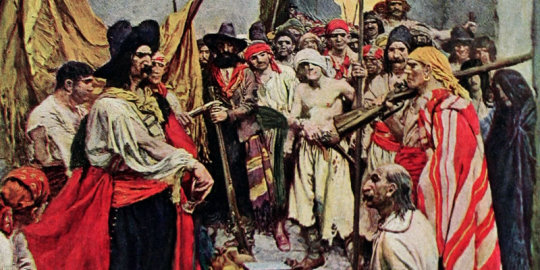
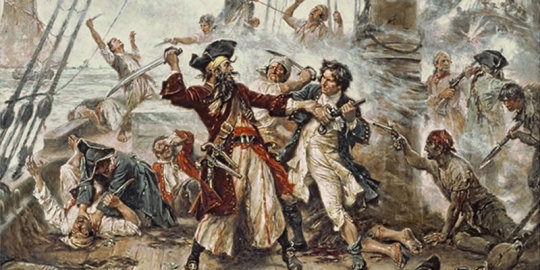
If you are running a game with pirates in it, then you should know
what the job entails. It’s not all boarding ships, counting booty, and
drinking rum like you might think. A great deal of hard work is required
to run a sailing ship with a law-abiding crew, let alone one populated
by pirates. In this essay we are going to examine the five principle
officers on board a pirate ship, their duties, and their
responsibilities. This is part one of a three part lesson. In the next
lesson we will examine the duties and responsibilities of other officers
and crew members with special duties. In the final lesson, we will look
at one very special group of crew members that are almost always
overlooked. Read on to learn what pirates expected of their primary
officers.
The principal officers of a pirate ship were the captain, the
quartermaster, the pilot, the boatswain, and the master gunner. On some
ships these positions were all elected by an equal vote of the crew and
on others the captain picked the crew members he wanted to serve in the
positions. The captain on a pirate vessel was almost always elected by
an equal vote of the crew. On a privateer vessel this was not very often
the case. Privateer captains were often the owners of the ship or were
given commission by their monarch to take a vessel to sea. So it follows
with the other officers. If the captain was elected, then generally all
of the officers were elected. If the captain was appointed or held his
position by means of ownership, then generally he picked the officers.
In either case, an officer on a pirate ship served at the whim of the
crew. Even a man picked by the captain would be booted down to a simple
crewman if he could not do his job. For the most part though, a person
elevated to serve as one of the principle officers did so for life. The
title of this article refers to the fact that most often the authorities
that captured, tried, and hung pirates concentrated on the five
principle officers of the ship. These officers were generally the most
intelligent and skilled crewmen on board the pirate vessel. They were
people that everyone else on board the ship admired for their ability to
do their job. Diligent action is the mother of respect on board a ship.
Captain
The captain, however he came to his position, was chosen for his
leadership, bravery, and cunning. The captain was responsible for the
ship and everything aboard her; every item and every man. He was
responsible for the overall decisions affecting the ship and her crew.
The captain decided where to sail and what to attack. He was the voice
of his crew to all beyond the ship. He often led his crew in battle. In
terms of daily duties, the captain kept a log of the voyage, managed the
affairs of the ship through the officers, and generally served a four
to six hour shift at the helm. The captain stayed in power by being
successful. As long as there are prizes to plunder, rum to drink, and
food to eat, the captain will not be voted out or mutinied against. It
is when things get lean that the captain must worry about crew voting
him unfit for command.
Quartermaster
The quartermaster (or first mate on a privateer vessel) was the
number two man on the ship. He was responsible for enforcing the ship’s
articles and administering punishment when necessary. The quartermaster
was the trustee of the ship and her crew. He directly represented the
crew to the captain. It was his responsibility to serve as a
counterbalance to the captain in decisions that might be hazardous to
the ship or the crew. A wise captain made no decisions that his first
mate didn’t support. The quartermaster took responsibility for prize
vessels and picked the treasure that the crew would take from a prize.
He was also responsible for counting the booty and splitting the shares.
Each day would find him working with his subordinate officers the
boatswain, the master gunner, and the master at arms to effectively run
the ship. The first mate also served a turn at the helm, generally a
four to six hour shift.
Pilot
The pilot was the number three man on the ship and often the most
educated. He served as the ship’s navigator and was generally the best
all around sailor aboard the ship. He was responsible for plotting the
ship’s course and maintaining that course. The pilot maintained all of
the ship’s charts and maps as well as the tools of navigation. He was
charged with keeping a daily log of every event relating to the sailing
of the ship. He recorded the depth, the currents, the wind patterns, the
ship’s location, the locations of reefs and sandbars, and the state of
the rigging. He reported directly to the captain. The pilot oversaw the
work of the sail-master and almost always had at least one assistant (a
pilot’s mate) to help him with his duties. The pilot and his mate both
served separate shifts at the helm in addition to taking readings from
the moon and stars to plot and maintain the course.
Boatswain
The boatswain was the number four man on the ship and often the most
feared by the crew. He was in charge of the provisions for the ship. He
maintained the stores of food, water, rum, gunpowder, shot, sails, rope,
wood, and tar required to keep the ship and crew fit for action. The
boatswain also directed the loading of cargo into the hold to maintain
the proper ballast to ensure level sailing. He was in charge of keeping
the watches on the ship and maintaining discipline among the deck crew.
He was responsible for the ship’s longboats and for picking a crew to
man the sweeps when the longboats were used. The boatswain was charged
with maintaining the ship’s seaworthy status. He oversaw the duties of
both the carpenter and the cook. The boatswain generally had a mate to
help him with his responsibilities. In general, his duties were to make
certain that all the work of running the ship was done. He reported to
the quartermaster. The Boatswain was often the most feared man on the
ship because his obligations often made him uncompromising. It was his
responsibility to keep everything “ship-shape”. Leniency was something
the quartermaster might give to the crew, but it was not something the
boatswain was in the position to give. Day and night, the boatswain
would drive the crew to do whatever work was required. He maintained the
watch log and reported any problems to the quartermaster.
Master Gunner
The master gunner was the number five man on the ship. He was
responsible for the care and cleaning of all firearms, culverin (deck
guns), and cannons on board the ship. He was also responsible for
training the crew in the use of both firearms and ship’s weaponry. The
master gunner picked and ran the gunnery crew. He reported to the
quartermaster, but was responsible to the entire ship to make certain
that the cannons hit the declared target. He was also responsible for
maintaining the inventory of powder and shot for all of the guns on the
ship. The master gunner was the only crew member besides the captain and
the quartermaster entrusted to carry a key to the ship’s powder
magazine. Additionally, the master gunner often led or picked hunting
parties when they were called for. His day to day duties mainly
consisted of drilling the gunnery crew and maintaining the guns.
The Next in Line to Hang – More Roles on a Pirate Ship
In this second part of a three part lesson dealing with the crew
positions aboard a pirate vessel, we are going to look at the
responsibilities of the Sail-master, the Carpenter, the Cook, the
Surgeon, and the Master at Arms. These were all lower officer positions
and were either voted upon or assigned by the captain as discussed in
the first part of this lesson. The sailors who served in these positions
were skilled laborers and, as such, their skills were always very much
in demand on a ship. They were almost always offered a greater share of
the treasure because of their skills. These were definitely crew members
that a pirate ship could not function without.
Sail-master
The Sail-master was the most experienced crewman in the rigging and
usually one of the best sailors on the ship. He was responsible for
maintaining the sails and the rigging. The Sail-master knew every knot,
line, rope, block and tackle in the rigging as well as how to repair
them all. He was also responsible for training and running the sail crew
as well as overseeing the making and patching of sails. The Sail-master
took orders from and reported to the pilot.
Carpenter
The Carpenter was a skilled wood worker, often with some shipwright
experience, who did all of the woodworking required by the crew. He was
primarily responsible for repairing damage to the wooden portions of the
ship and for plugging leaks that got too bad. (Ye should understand
right now, before ye go to sea, that all ships leak, mates. It’s just
when they really leak badly that you have to worry about it.) The
Carpenter was also responsible for the construction of barrels and
crates, as needed, to store cargo, as well as maintaining the tools of
his trade. He took orders from and reported to the Boatswain.
Cook
The Cook was one of the most important of the lower officers. He was
in charge of all matters relating to food on the ship. He made certain
there was enough food, water, and rum on board for the planned cruise.
He cooked the meals and suggested rationing when it was necessary. The
Cook butchered the meat brought back by hunting parties and was the only
man trusted to light a fire below decks. He maintained the necessary
tools for both cooking and butchering. The Cook took orders from and
reported to the Boatswain.
Surgeon
The Surgeon was likely one of the toughest men on the ship. He served
as the barber/doctor/emergency surgeon for the entire crew. He was
equally capable of shaving your beard and cutting off your damaged leg.
The Surgeon dealt with not only the sick and the wounded, but also the
dead. He, like the other lower officers, was responsible for maintaining
the necessary tools of his trade. The Surgeon took his orders from and
reported to the Quartermaster. It was rare for a ship to have a real
doctor and it was common for the carpenter or the cook to fill this role
as needed.
Master at Arms
The Master at Arms was often the most skilled warrior on the crew. He
was responsible for training the crew in hand to hand combat. He also
led the ship’s boarding parties and hunting parties when they were
necessary. The Master at Arms position was not a separate position on
every vessel and often these responsibilities fell to the Quartermaster.
When the Master at Arms position was filled on a ship, he took orders
from and reported to the Quartermaster.
These 5 core positions represent the Non-Commissioned Officers of a
pirate or privateer ship. These men all commanded other men on work
details and so their words carried great sway with the crew. It was
often from among these men that the next captain was chosen when a
captain lost his position through a vote of no confidence. Thus, these
were the men that the captain had to keep loyal to him to stay in
command of the ship.
And Hang the Musikers, Too – Even More Roles on a Pirate Ship
In this article, we will be looking at the makeup of the crew itself.
Remember that the only rule with pirates is that there are no rules; no
two crews of any two pirate ships were exactly the same. Even so, we
can narrow down some roles common to pirate/privateer crews based upon
the jobs that must be done aboard ship. Most simply put, pirate crews
are a mixture of brutes, gunners, swabbies, and musikers. Let’s examine
each category in turn.
Brutes
A great deal of hard work and heavy hauling is involved in just
sailing a tall-masted ship. In strong winds the canvas sails must be
man-handled by a deck crew that is stronger. Loading and unloading
supplies, most especially cannons or chests of gold, requires a number
of strong backs. This is why every ship has its share of brutes – big,
strong men capable of handling themselves no matter the work or the
fight. In addition to the tasks already mentioned, brutes would be key
men in hunting parties, ship boarding, and raiding groups as well. Keep
in mind that not all brutes need to be hulking bruisers. A wiry-tough
and dexterous hunter, skilled with both blades and long rifle, could be a
brute as well. Brutes, no matter their size, do not shrink from a hard
task. Men of this sort make up perhaps as much as ½ of a pirate crew,
but they will be mixed among the gunners and swabbies, not a stand alone
corp. Most of the men on a pirate or privateer ship were probably
gunners.
Gunners
Depending upon the size of their shot, each cannon required a crew of
either 3 or 4 men to load and fire it. So a sloop carrying 4 small guns
per side would require a minimum of 24 men to fully maintain them and
that does not include the officers directing the cannon fire. On a large
ship, like Blackbeard’s Queen Anne’s Revenge, a full gun crew would be 160 men dedicated only to firing the cannons. (It is
important to note here that Blackbeard had a total crew compliment of
125 on board the Queen Anne’s Revenge.) These crewmen would
have to be available 24/7 to do their job whenever required, but
otherwise might have no duties on the ship. There was double-duty in
most crews though. Most pirate ships didn’t keep a full compliment of
gunners like warships of the time did because fewer crew members meant
fewer shares and that meant more money for everyone when the treasure
was split. Gunners could make up between 1/3 to 2/3 of a crew.
Swabbies
Swabbies, or actual trained sailors, are the crew members responsible
for handling the rigging and the sails to keep the ship moving. These
are the guys and gals who climb the ratlines into the rigging and walk
the spars that jut from the masts. Swabbies sometimes fight from the
highest position that they can get to on their own ship and then leap
into the rigging of the enemy vessel when boarding. Often dexterous
fighters, swabbies are known for leaping into the fray, but sometimes
they hide in the rigging as deadly snipers. It might be surprising to
discover that skilled sailors usually comprised less than 1/3 of the
total crew compliment of the ship.
Musikers
It is difficult to prove that “musikers”, or musicians as we call
them, were ever a stand-alone part of a pirate crew. However, two
excellent examples from the pirate period demonstrate that they have
been a common part of most ships of war, pirate and privateer ships
included. The first example is from the early Seventeenth century. In
Captain John Smith’s advice concerning how to conduct a one-on-one naval
engagement he remarks when preparing to board one should, “… sound
Drums and Trumpets, and Saint George for England.” The second example
comes from the early Eighteenth century. In the articles of Captain
Bartholomew Roberts it is stated: “The Musikers to have Rest on the
Sabbath Day, but the other six Days and Nights, none without special
Favour.” When thinking about the musicians on board a ship in the 16th
to 18th centuries, one must not think of a band. That would be far too
organized a concept. There is no way to know how many crew members may
have been musicians, but one assumes that the number is not large.
It is likely that ships of this period had crew members who owned
musical instruments as varied as brass horns, mouth harps, fiddles, bag
pipes and accordions. Furthermore, sailors could gather numerous
instruments from the various ports of call their ship made. Examples
here are numerous: cowhide and goatskin drums from Africa, dried gourd
maracas from Cuba, bamboo drums and flutes from Hispaniola, and even
tambourines from Morocco. Pause a moment and consider the combined
sounds of all of the instruments mentioned here. Now you know why a band
is not the idea you want to have. The musicians were popular with the
crew, as they were entertainment as well as a valuable battle element.
The musicians played during meal times and during work breaks allowing
the crew some entertainment to break the monotony of long hours of
tiring work. This boost in moral was welcome at anytime, but was perhaps
the most effective when used in battle.
From stories of Bartholomew Roberts crew and others, we know that
when a ship with musicians approached another ship with the intention to
fight, the effects of the music could be terrifying to the enemy. The
musicians would play marches and other martial music. There were drum
rolls, trumpet and bugle calls, and perhaps even a piper given the
nationality of the crew. Add to this the noise of the ship’s cook
beating upon his pots and pans and the crew stamping their feet or
beating their weapons against the ship. Finally top this off with the
sounds of shouting, screaming, and shooting, both pistols and rifles as
well as cannons and deck guns. Your imagination can supply you with the
details of the scene. The intended result is achieved: the morale aboard
the pirate vessel is raised to a fevered pitch while the morale of
their intended prize is shaken. So do not forget that pirates and
privateers know the value of bardic inspiration when you run those
encounters.
The landscape is unforgiving, either dry, searing hot desert, or freezing cold snow-covered mountains, or scruffy rooms, cafes, bars.
The characters are Men With Difficult Pasts. They wear several suits of armour. One is being laconic. One is sarcasm. One is oneupmanship. The outermost one is ruthlessness.
At the end there is a moment of hope, of almost-warmth.
I’m still on my bullshit, and Leonard Cohen is still the unofficial lyricist for Black Sails. Anyway, “Bird on the Wire” is Flint’s song. Choice quotes in bold:
Like a bird on the wire Like a drunk in a midnight choir I have tried in my way to be free
Like a worm on a hook Like a knight from some old-fashioned book I have saved all my ribbons for thee If I, if I have been unkind I hope that you can just let it go by If I, if I have been untrue I hope you know it was never to you
For like a baby, stillborn Like a beast with his horn I have torn everyone who reached out for me But I swear by this song And by all that I have done wrong I will make it all up to thee
I saw a beggar leaning on his wooden crutch He said to me, “you must not ask for so much” And a pretty woman leaning in her darkened door She cried to me, “hey, why not ask for more?”
Oh, like a bird on the wire Like a drunk in a midnight choir I have tried in my way to be free
When I lived in London, I shared a flat with a guy who was 26 years old, getting his PhD in theoretical physics. Let’s call him Ron. Ron could not for the life of him figure out why I was wasting my time with an MA in Shakespeare studies or why my chosen method of providing for myself was writing fiction. Furthermore, it was utterly beyond him why I should take offense to someone whose field literally has the word “theoretical” in the title ridiculing the practical inefficacy of art. My pointing out that he spent his free time listening to music, watching television, and sketching famous sculptures in his notebook somehow didn’t convince him that art is a necessary part of a healthy human existence.
Three other things that happened with Ron:
I came home late one night and he asked where I’d been. When I told him I’d been at a friend’s flat for a Hanukkah celebration, he said, “What’s Hanukkah?” I thought he was joking. He was not.
A few weeks later, I came downstairs holding a book. He asked what I was reading and when I said, “John Keats,” he (and the three other science grad students in the room) did not know who that was. This would be like me not knowing who Thomas Edison is.
One night we got into an argument about the issue of gay marriage, and at one point he actually said, “It doesn’t affect me so I don’t see why I should care about it.”
Now: If Ron had ever read Number the Stars, or heard Ode to a Nightingale, or been to a performance of The Laramie Project, do you think he ever would have asked any of these questions?
Obviously this is an extreme example. This guy was amazingly ignorant, but he was also the walking embodiment of the questions you’re asking. What does art matter compared with something like science, that saves people’s lives? Here’s the thing: There’s a flaw in the question, because art saves lives, too. Maybe not in the same “Eureka, we’ve cured cancer!” kind of way, but that doesn’t make it any less important. Sometimes the impact of art is relatively small, even invisible to the naked eye. For example: as a young teenager I was (no exaggeration) suicidally unhappy. Learning to write is what kept me (literally and figuratively) off the ledge. But I was one nameless teenager; in the greater scheme of things, who cares? Fair enough. Let’s talk big picture. Let’s talk about George Orwell. George Orwell wrote books, the two most famous of which are Animal Farm and 1984. You probably read at least one of those in high school. Why do these books matter? Because they’re cautionary tales about limiting the power of oppressive governments, and their influence is so pervasive that the term “Big Brother,” which refers to the omniscient government agency which watches its citizens’ every move in 1984, has become common parlance to refer to any abuse of power and invasion of privacy by a governmental body. Another interesting fact, and the reason I chose this example: sales of 1984 fucking skyrocketed in 2017, Donald Trump’s first year in office. Why? Well, people are terrified. People are re-reading that cautionary tale, looking for the warning signs.
Art, as Shakespeare taught us, “holds a mirror up to nature.” Art is a form of self-examination. Art forces us to confront our own mortality. (Consider Hamlet. Consider Dylan Thomas.) Art forces us to confront inequality. (Consider Oliver Twist. Consider Audre Lorde. Consider A Raisin in the Sun. Consider Greta Gerwig getting snubbed at the Golden Globes.) Art forces us to confront our own power structures. (Consider Fahrenheit 451. Consider “We Shall Overcome.” Consider All the President’s Men. Consider “Cat Person.”) Art reminds us of our own history, and keeps us from repeating the same tragic mistakes. (Consider The Things They Carried. Consider Schindler’s List. Consider Hamilton.) Art forces us to make sense of ourselves. (Consider Fun House. Consider Growing Up Absurd.) Art forces us to stop and ask not just whether we can do something but whether we should. (Consider Brave New World. Consider Cat’s Cradle.) You’re curious about ecopoetics? The whole point is to call attention to human impact on the environment. Some of our scientific advances are poisoning our planet, and the ecopoetics of people like the Beats and the popular musicians of the 20th century led to greater environmental awareness and the first Earth Day in 1970 . Art inspires change–political, social, environmental, you name it. Moreover, art encourages empathy. Without books and movies and music, we would all be stumbling around like Ron, completely ignorant of every other culture, every social, political, or historical experience except our own. Since we have such faith in science: science has proved that art makes us better people. Science has proved that people who read fiction not only improve their own mental health but become proportionally more empathetic. (Really. I wrote an article about this when I was working for a health and wellness magazine in 2012.) If you want a more specific example: science has proved that kids who read Harry Potter growing up are less bigoted. (Here’s an article from Scientific American, so you don’t have to take my word for it.) That is a big fucking deal. Increased empathy can make a life-or-death difference for marginalized people.
But the Defense of Arts and Humanities is about more than empirical data, precisely because you can’t quantify it, unlike a scientific experiment. Art is–in my opinion–literally what makes life worth living. What the fuck is the point of being healthier and living longer and doing all those wonderful things science enables us to do if we don’t have Michelangelo’s David or Rimbaud’s poetry or the Taj Mahal or Cirque de Soleil or fucking Jimi Hendrix playing “All Along the Watchtower” to remind us how fucking amazing it is to be alive and to be human despite all the terrible shit in this world? Art doesn’t just “improve human lives.” Art makes human life bearable.
I hope this answers your question.
To it I would like to add: Please remember that just because you don’t see the value in something doesn’t mean it is not valuable. Please remember that the importance of science does not negate or diminish the importance of the arts, despite what every Republican politician would like you to believe. And above all, please remember that artists are every bit as serious about what they do as astronomers and mathematicians and doctors, and what they do is every bit as vital to humanity, if in a different way. Belittling their work by questioning its importance, or relegating it to a category of lesser endeavors because it isn’t going to cure a disease, or even just making jokes about how poor they’re going to be when they graduate is insensitive, ignorant, humiliating, and, yes, offensive.And believe me: they’ve heard it before. They don’t need to hear it again. We know exactly how frivolous and childish and idealistic and unimportant everyone thinks we are. Working in the arts is a constant battle against the prevailing idea that what you do is useless. But it’s bad enough that the government is doing its best to sacrifice all arts and humanities on the altar of STEM–we don’t need to be reminded on a regular basis that ordinary people think our work is a waste of time and money, too.
Artists are exhausted. They’re sick and tired of being made to justify their work and prove the validity of what they do. Nobody else in the world is made to do that the way artists are. That’s why these questions upset them. That’s why it exasperates me. I have to answer some version of this question every goddamn day, and I am so, so tired. But I’ve taken the effort to answer it here, again, in the hopes that maybe a couple fewer people will ask it in the future. But even if you’re not convinced by everything I’ve just said, please try to find some of that empathy, and just keep it to yourself.
Someone had asked this blogger, quite politely, if they really thought that art and poetry were as important as science and medicine, which contributed to saving lives. This is the blogger’s reply. So happy they, angry and tired as they were, did not just dismiss the questioner as a “fucktard” and took the time to reply.
You can do the thing. It starts with another thing.
You can really do the thing. You can really achieve the dream and pursue your goal and find recovery.
But it has to start with one thing. It has to start with letting go of a lot of other things.
Maybe that means your current group of people. Or one person. Or some late night habits. Or the thing you keep throwing money at. Or an ideal version of yourself that’s just impossible.
None of that is easy, I know. I have this habit of starting new stuff and then I quit halfway through. It’s because I look sideways, seeing what everyone else is doing. It’s discouraging. “I could never be that good,” the little voice says. Everyone else seems better. More witty or charming or articulate. I’m missing “it,” you know, the elusive charm they were born with. So I stop doing all the things. “They’re already giving the world what I can barely do myself,” is the voice that keeps me down.
I have to let go of comparison.
I have to let go of some romanticized self.
I have to let go of the fear that I won’t be well received, the fear of silent response, the fear of crickets and tumbleweed.
You can do the thing. It starts with letting go of fears, habits, harmful people, bad advice, even beliefs we once held dear.
You can really, really do the thing. The stuff that hinders can be shed.
Are you there, too? Is there anything you need to let go of? Anything you did let go of which changed it all for you?
“It annoys me when people say, ‘Oh, the Iraq War, it was a geostrategic error. It was a colossal blunder. It was a failure.’ No, it was a crime. It was in defiance of international law, and it was defined over the last 15 years by war crimes, by widespread torture, by human rights abuses, by massacres.”



 mici's campfire